

Tariff appliances impact
Tariffs can raise the cost of appliances before they ever reach the showroom floor, especially when they apply to steel, aluminum, copper, electronics, finished goods, or cross-border imports. For shoppers, the practical takeaway is simple: compare models sooner, watch promotions closely, and build flexibility into your appliance budget. This guide explains the tariff impact on appliances, which categories tend to feel it most, and how to shop more strategically with Corbeil Appliances.
How do tariffs affect appliance prices?
Tariffs affect appliance prices by adding costs somewhere in the supply chain: on raw materials, imported components, finished appliances, or goods crossing a border. Retail prices do not always rise by the exact tariff rate, because manufacturers, distributors, and retailers may absorb part of the cost, adjust promotions, change sourcing, or phase increases in gradually. Still, when tariffs apply to materials used heavily in major appliances, the pressure can show up as higher prices, fewer discounts, delayed inventory, or a narrower selection.
As of September 2026, the trade environment remains unsettled. Canada announced counter-tariffs targeting sectors including steel, dairy, appliances, agricultural equipment, pulp and paper, and electronics, while U.S. measures have also affected steel, aluminum, copper, and derivative products. (canada.ca) That matters because refrigerators, ranges, dishwashers, washers, dryers, and built-in cooking products often combine metal, motors, compressors, circuit boards, and imported subassemblies.
The impact of tariffs is not limited to the sticker price. A tariff can also change what suppliers choose to import, which models retailers can replenish quickly, and whether a manufacturer simplifies a product line to protect margins. For a homeowner replacing a broken refrigerator, that can mean fewer “perfect match” options in stock. For someone planning a kitchen renovation, it can mean ordering earlier to avoid a last-minute substitution.
The appliances most exposed to tariff pressure
The tariff appliances impact is usually most visible in large appliances with high material content or complex imported parts. A basic freezer and a smart refrigerator may both be affected, but not always in the same way. The freezer may be more exposed to steel and aluminum costs, while the smart refrigerator may also depend on electronics, sensors, displays, and control boards.
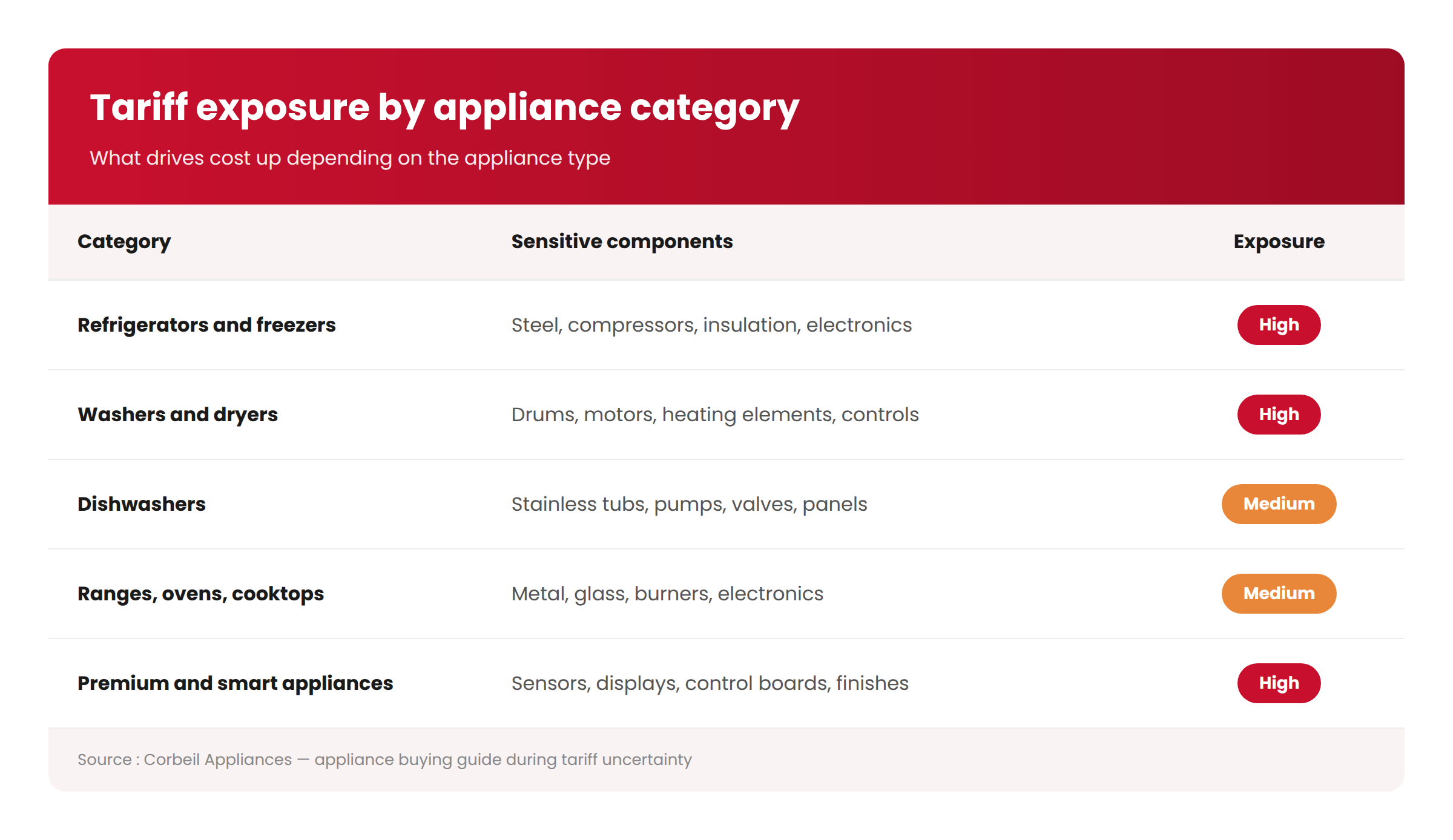
Categories that can be more sensitive include:
-
Refrigerators and freezers: These use metal cabinets, compressors, insulation systems, shelves, and electronics. Larger formats and feature-rich models may be more vulnerable to component-related cost increases.
-
Washers and dryers: Laundry pairs rely on drums, motors, heating elements, electronic controls, and metal housings. If you need both units, a tariff-related increase can feel larger because the purchase is bundled.
-
Dishwashers: Dishwashers include stainless-steel or hybrid tubs, pumps, racks, valves, and control panels. Built-in models can also be harder to substitute during a renovation because dimensions matter.
-
Ranges, ovens, and cooktops: Cooking appliances use metal, glass, electronics, burners, heating systems, and sometimes specialized parts. Slide-in and built-in formats may have fewer quick alternatives.
-
Premium and smart appliances: The more specialized the features, finishes, and electronics, the more opportunities there are for tariff-related cost changes or supply disruption.
This does not mean every appliance in these categories will rise sharply or immediately. It means shoppers should pay attention to total value, availability, warranty coverage, delivery timing, and whether the model they want is already in stock.
Why the final price increase is rarely simple
A tariff rate is a policy number; a retail price is the result of many business decisions. If a 25% or 50% duty applies to a material or a product category, the final appliance price may rise by less, more, or later than shoppers expect. The difference depends on how much of the appliance is affected, where it is assembled, how it is transported, and how much inventory was purchased before the tariff took effect.
For example, a manufacturer might already have pre-tariff inventory in a warehouse. A retailer might run promotions to keep traffic steady. A supplier might redesign sourcing or shift production. On the other hand, if replacement inventory arrives at a higher landed cost, those increases may eventually work their way into regular pricing.
That is why the smartest response is not panic buying. It is informed buying. If your appliance is near the end of its life, if you are renovating, or if your preferred size is uncommon, waiting may reduce your choices. If your current appliance is still reliable and you are flexible on finish and features, you may have more room to monitor deals.
How origin, components, and inventory can change what you pay
Where an appliance is assembled can influence its exposure to tariffs, but it is not the only factor. A product assembled in one country can still rely on imported components, while an imported appliance may be affected differently depending on trade rules, origin, material content, and exemptions.
For Canadian shoppers, the practical move is to focus on the model you want (and its alternatives): availability, delivery date, comparable options in the same size, and whether the current price is tied to existing inventory. If tariffs are part of your buying concern, ask about what’s in stock now versus what’s incoming, and choose a product that fits your timeline.
Corbeil Appliances can help you compare like-for-like options so you do not overpay for features you do not need—especially when pricing and availability are changing.
What should you do before buying appliances during tariff uncertainty?
Before buying, decide which factors are fixed and which are flexible. Fixed factors include size, installation type, fuel type, ventilation requirements, and delivery timing. Flexible factors may include finish, handle style, smart features, or whether you buy a matching suite immediately.
Use this quick buying checklist:
-
Measure first. Confirm width, height, depth, door swing, hallway clearance, and connection locations before comparing prices.
-
Separate needs from upgrades. Ice makers, Wi-Fi, specialty cycles, air fry modes, and panel-ready designs can be useful, but they may limit your choices.
-
Check in-stock and incoming inventory. If a retailer has stock bought before a price change, timing can matter.
-
Compare total cost, not just price. Delivery, installation, accessories, removal, energy use, and compatibility can change the real value of a deal.
-
Watch liquidation and flyer offers. Clearance, overstock, open-box, and limited-time flyer pricing can help offset tariff-related increases.
-
Plan multi-appliance purchases together. Bundles may help when replacing a kitchen suite or laundry pair, especially if finishes and dimensions need to match.
Compare promotions, flyer offers, and liquidation inventory
If you’re trying to offset the tariff impact on appliances, these three places are often the fastest way to find value:
-
Promotions: Great for current discounts across popular categories. Shop promotions
-
Flyer offers: Best for time-limited, highlighted deals in one place. View the latest flyer
-
Liquidation inventory: Ideal for clearance, last-chance, and limited-quantity opportunities. Shop liquidation
Promotions, flyers, and timing matter more now
When prices are stable, many shoppers can afford to wait for the next sale. During tariff uncertainty, timing becomes more strategic. A promotion on available inventory may be more valuable than a slightly better theoretical deal later, especially if the next shipment arrives with higher costs or fewer model choices.
Flyers are useful because they highlight current offers in one place. They can also help you spot patterns: which categories are being discounted and whether a package deal fits your renovation schedule. If you are replacing an appliance urgently, the flyer can narrow your search quickly. If you are planning ahead, it can help you set a realistic budget.
A practical shopping plan for the next 30 days
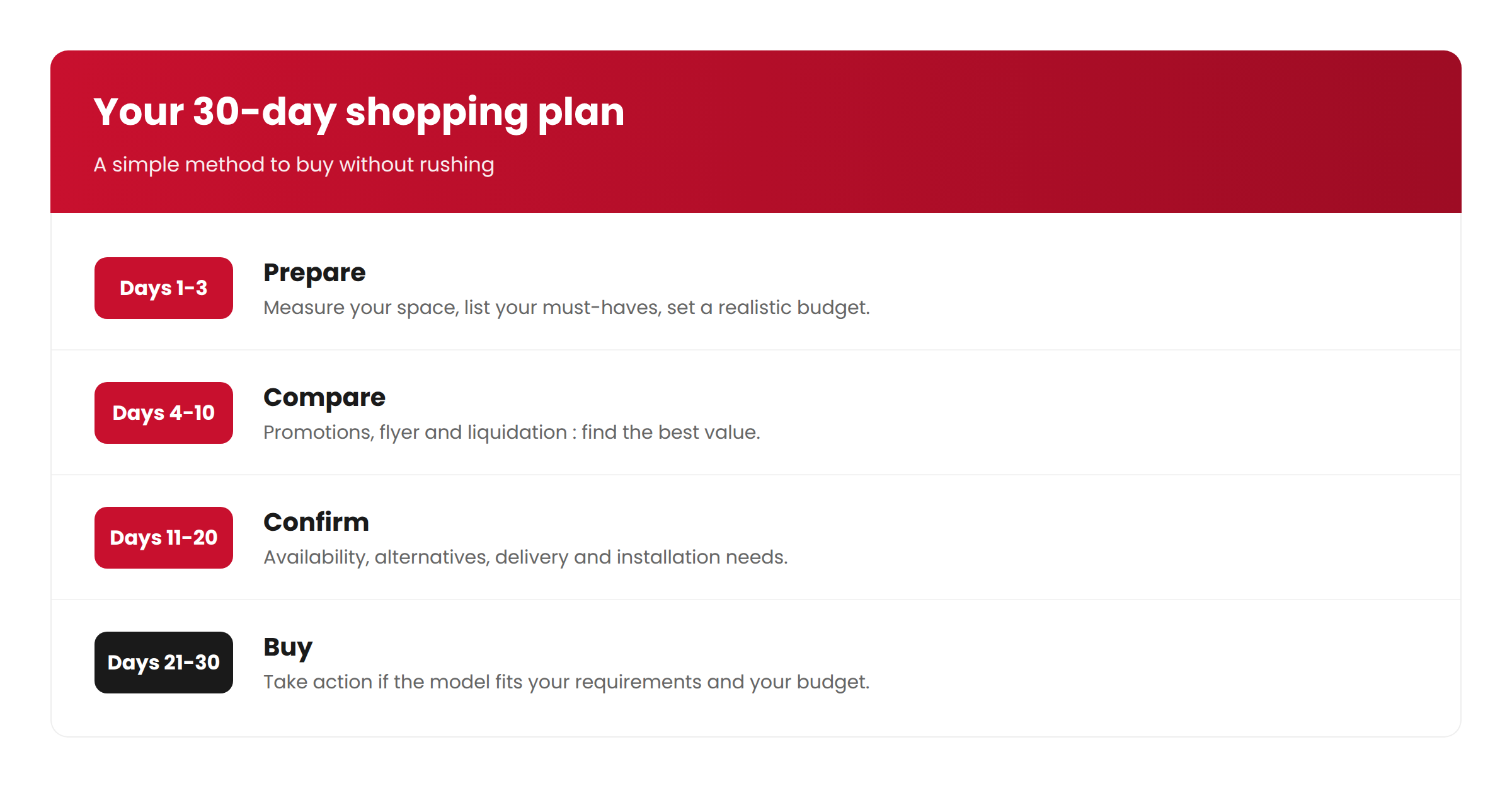
If you are concerned about the impact of tariffs on an upcoming purchase, use a short, focused plan instead of browsing endlessly.
-
Days 1 to 3: Measure your space, list must-have features, and set a realistic budget range.
-
Days 4 to 10: Compare current promotions, flyer offers, and liquidation inventory.
-
Days 11 to 20: Confirm availability, alternatives, delivery, and installation needs.
-
Days 21 to 30: Make the purchase if you find a model that fits your requirements and budget, especially for urgent replacements or renovation timelines.
This approach keeps you from rushing while still protecting you from avoidable delays. It also gives you room to compare substitutes if your first-choice model is affected by price changes or inventory
FAQ: Tariffs and appliance shopping in Canada
Will tariffs automatically raise appliance prices in Canada?
Not always. Pricing can depend on existing inventory, supplier costs, and which parts of the supply chain are affected. If you’re trying to understand current conditions, start here: Corbeil tariff information.
Should I buy now or wait for a better deal?
If you have a tight timeline (a broken appliance or a renovation deadline), prioritize in-stock options and delivery timing. If you have flexibility, track offers across promotions and the weekly flyer.
What’s the difference between promotions and flyer offers?
Promotions typically cover broader sets of current discounts, while flyer offers spotlight selected deals for a limited time. Use both to compare value: promotions and flyer.
Is liquidation a good way to offset tariff-related increases?
It can be, especially if you’re flexible on finish or exact model. Inventory can be limited, so it’s worth checking regularly: Corbeil liquidation.
Which appliance categories are most affected by tariff pressure?
Large appliances with lots of metal and complex components (like refrigerators, ranges, dishwashers, and laundry) can be more sensitive, but the real impact varies by model and availability.
Where should I start shopping if I want to compare options fast?
Begin with Corbeil’s product selection and then cross-check deals across promotions, flyer, and liquidation: corbeilelectro.com.
The takeaway for appliance shoppers
The tariff impact on appliances is real, but it is not uniform. Some products may see stronger pressure because of metal content, imported electronics, sourcing, or cross-border duties, while others may remain competitive because of existing inventory or stronger promotions. The right move is to shop with a clear list, compare current offers, and act sooner when timing, size, or model availability matters.
For current appliance options, tariff-related shopping guidance, promotions, liquidation deals, and weekly offers, start with Corbeil Appliances online. Visit Corbeil Appliances or go directly to tariff information, promotions, liquidation, and the weekly flyer.